
Powered By


 Continue with Facebook
Continue with Email
Continue with Facebook
Continue with Email
If you get frequent migraine attacks, your doctor may recommend preventive treatment.
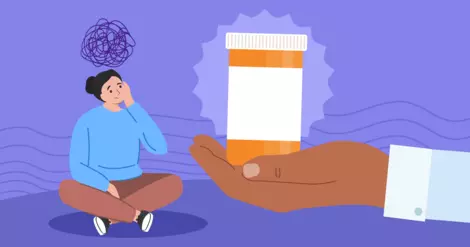
Gabapentin is one medication sometimes prescribed as preventive treatment for migraine. However, gabapentin isn’t approved specifically to treat migraine. When doctors prescribe it for migraine, it’s called off-label use.
Read on to learn why and when gabapentin is used to prevent migraine attacks, how it works, common side effects, and more.
Gabapentin, sold under brand names Neurontin, Horizant, and Gralise, is an anti-seizure (also called an anticonvulsant) medicine that was developed to treat seizures in people with epilepsy. Later, neurology specialists found it can also help with nerve pain.
Gabapentin works by calming down nerve signals in the brain and body. Since migraine involves changes in how the brain handles pain signals, doctors wondered if gabapentin might help prevent migraine attacks and other headache disorders too.
The answer to this question is a bit mixed.
Some early studies showed that gabapentin might help reduce the frequency of migraine attacks. One study found people had fewer attacks while taking it. But when scientists looked at many studies together, the results didn’t clearly prove that gabapentin helped with migraine.
A large review found that gabapentin didn’t clearly work better than a placebo (inactive treatment) for preventing migraine attacks in clinical trials.
Other research and guidelines echo this same finding. They show that gabapentin may help some people, but overall, it doesn’t work as well as other migraine medicines.
Some physician groups even suggest gabapentin shouldn’t be used as a regular migraine treatment because other options work better.
So in simple terms, gabapentin for migraine can help some people, but it’s likely not the most reliable choice. It may be tried when other options aren’t a good fit or when other conditions are present.
Doctors usually start treatment by prescribing migraine medications that have the strongest proof that they work. For migraine, these include drugs like:
Gabapentin doesn’t work as well as these medications for most people. That’s why it’s usually not the first medicine a doctor recommends. Instead, it tends to come later in the treatment process if needed.
Doctors also think about how predictable a medication’s effectiveness is. Since gabapentin works well for some people but not others, it’s less reliable as a first treatment. This is one reason it’s not widely recommended in guidelines from migraine experts.
Even though it’s not a first choice, gabapentin may still be prescribed for migraine in some situations. Migraine care isn’t a one-size-fits-all condition, and treatment often depends on the whole picture of your health. A doctor might suggest gabapentin if other medications haven’t worked or have caused too many side effects.
Gabapentin may also help if you have other health conditions at the same time. For example, it can be used for:
In these cases, one medication might help with more than one health issue. Still, it’s important to know that results vary. Some people feel better on gabapentin, and others don’t notice much change. Your experience may be different from someone else’s, and that’s normal with migraine treatment.
Sometimes it takes trying a few different treatments to find the right fit.
Like all medications, gabapentin can cause side effects. Common side effects of gabapentin include:
These side effects often show up when you first start the medication but may get better over time as your body adjusts.
Because gabapentin can make you sleepy or dizzy, be careful driving or doing other potentially dangerous activities until you know how it affects you. It may also help to take the first few doses when you can rest if you need to.
There are a few key safety tips to keep in mind if you take gabapentin.
Stopping gabapentin suddenly can cause problems, so doctors usually lower the dose slowly. Mixing it with alcohol or certain drugs can make side effects worse, especially breathing problems.
Some people may notice mood changes, like feeling more anxious or depressed.
Rarely, serious allergic reactions can happen, such as swelling or trouble breathing.
Gabapentin is usually taken as a pill, often two or three times a day. Be sure to take gabapentin exactly as your doctor prescribes it.
Doctors usually recommend starting with a low dose of gabapentin and slowly increasing it. This helps your body get used to the medicine and lowers the chance of side effects.
It can take a few weeks to see if it’s helping prevent migraine headaches, so it’s important to give it enough time and take it consistently. Missing doses can make it harder to tell if it’s working.
Some people take gabapentin with food to help with stomach discomfort, although that depends on personal preference and doctor advice.
Trying gabapentin is often a test to see how your body responds.
Some people notice fewer migraine attacks or milder symptoms. Others may not notice much difference. Side effects may happen at first but sometimes improve over time.
It can help to track your migraine attacks in a headache diary while taking gabapentin. Writing down when attacks happen and how severe they are can help you and your doctor decide if the medicine is working. This can also make follow-up visits more useful and focused.
Try to be patient during this process. Preventive treatments often need time to take full effect, and even small improvements can still be meaningful in daily life. Over time, those small changes can add up and make a difference you can feel.
Gabapentin is usually not as strong as other migraine prevention options.
Medicines like topiramate, triptans, or newer calcitonin gene-related peptide antagonists (CGRP) treatments tend to work better for more people. These drugs are often used first because they have stronger evidence of effectiveness.
Gabapentin is more of a backup option, used when other treatments aren’t a good fit or haven’t worked well enough. It may still be helpful in the right situation, especially when other health needs are part of the decision.
Keep an open dialogue with your migraine specialist about your migraine treatment plan to make sure it’s meeting your needs.
On MyMigraineTeam, people share their experiences with migraine, get advice, and find support from others who understand.
Have you and your doctor ever talked about trying a different kind of preventive medicine for your migraine? Let others know in the comments below.
Get updates directly to your inbox.




 Continue with Facebook
Continue with Email
Continue with Facebook
Continue with Email
Continue with Facebook
Continue with Email
Continue with Facebook
Continue with Email
Become a member to get even more





 Join
Join


 Your Privacy Choices

This is a member-feature!
Sign up for free to view article comments.
We'd love to hear from you! Please share your name and email to post and read comments.
You'll also get the latest articles directly to your inbox.