
Powered By



Recurrent painful ophthalmoplegic neuropathy (RPON) is a rare condition that causes ophthalmoplegia, which is paralysis of the eye muscles. It can affect different eye muscles that control eye movement.
Until 2018, recurrent painful ophthalmoplegic neuropathy was called ophthalmoplegic migraine, so you may still hear this older name. Researchers believe the new name better describes the condition. RPON causes recurring headaches and other migraine-like symptoms, along with weakness or paralysis of the eye muscles.
Here’s what you should know about the symptoms and possible causes of RPON. Talk with a healthcare provider or neurologist if you notice any of these symptoms.
RPON was first described as ophthalmoplegic migraine in 1860. In 2018, the International Headache Society renamed it recurrent painful ophthalmoplegic neuropathy.
People with RPON have episodes of headaches along with weakness or paralysis in one or more nerves that control eye movement. The third cranial nerve is most often affected, but the fourth or sixth cranial nerve may also be involved. RPON can happen more than once and mainly affects the head and eyes.
Recurrent painful ophthalmoplegic neuropathy was renamed after researchers began to question whether it was truly a type of migraine. Some evidence suggests that it may instead be a nerve disorder that causes headaches and other migrainelike symptoms.
RPON usually begins between ages 8 and 22. However, cases have been reported in infants as young as 3 months and adults as old as 74 years.
Women develop RPON slightly more often than men, according to the Journal of Medical Optometry. But rates are the same across different ethnic backgrounds.
Twelve pairs of cranial nerves start in the brain, but only some help control eye movement. The nerve most often involved in RPON is the third cranial nerve, also called cranial nerve 3 (sometimes written as CN III).
There’s one cranial nerve 3 on each side of the brain, so the nerves form a pair. Each one controls several muscles that move the eye. You can picture the nerve as an arm extending from the brain, with fingers connecting to muscles around the eye.
Sometimes RPON affects the fourth or sixth cranial nerve instead of or along with cranial nerve 3, but this is much less common.
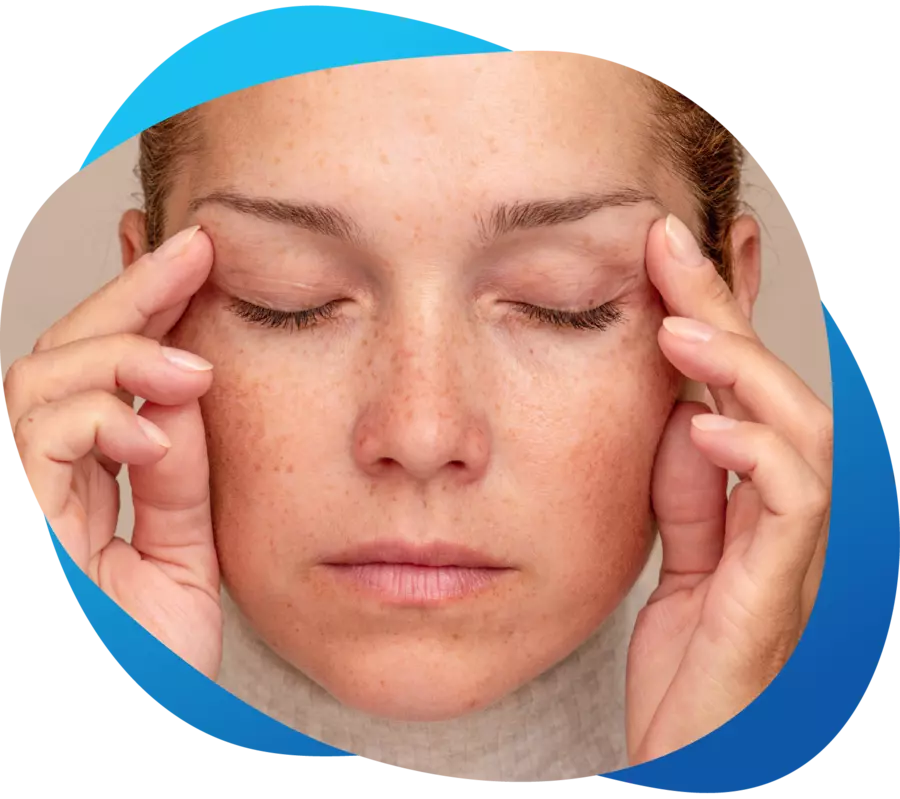 Cranial nerve 3 helps control:
Besides a headache, common symptoms of RPON are similar to those of migraine. They may include nausea and sensitivity to light or sound.
Eye symptoms in RPON usually affect one eye because the nerves on one side are involved. They typically include:
Mydriasis can cause blurry vision and light sensitivity. Ptosis can block your vision. It can also make your eyes feel watery, itchy, or tired.
People with binocular diplopia see double when both eyes are open. The double vision usually goes away when either eye is closed. It can be a sign of a problem with a cranial nerve.
The headache from RPON usually goes away within a week. However, eye symptoms may last for several weeks or even a few months.
RPON may happen as rarely as once every two years or as often as six times a year. People who have frequent attacks may develop ongoing eye symptoms.

RPON is a rare condition. Some of its symptoms can look like serious conditions, such as a stroke.
New painful double vision, a droopy eyelid, or one pupil that looks larger than the other can also be an emergency. These symptoms can sometimes happen with a problem in a blood vessel in the brain, such as an aneurysm.
Get medical help for symptoms like:
Other possible signs of stroke include weakness in the arms, slurred speech, confusion, numbness, and balance problems. Some people also get a severe headache with a stroke.
Until a healthcare provider runs some tests, there’s no way to know if you or your loved one is having a medical emergency.
A clinical exam and imaging tests can help doctors find the cause of your symptoms.
RPON is usually diagnosed only after other causes have been ruled out. Doctors generally look for at least two attacks of headache with weakness of an eye-movement nerve on the same side. The first episode of these symptoms should be checked right away rather than assumed to be RPON.
An eye doctor can check for several signs of RPON to help tell it apart from other conditions. First, they’ll test whether you’re having binocular double vision.
They’ll also check your optic nerve and look for dilated pupils, drooping eyelids, and changes in your field of vision. These results will help guide further testing.
MRI, often with contrast dye, can help doctors look for signs of RPON and rule out other conditions. For instance, an MRI can show inflammation around the cranial nerves. In people with RPON, these nerves may look thick and enlarged.
However, many people with RPON don’t have abnormal MRI results. Their cranial nerves may look normal, meaning other tests are needed to diagnose RPON.
An MRI can also help find other causes of these symptoms, such as Tolosa-Hunt syndrome. It’s a rare condition that causes painful inflammation behind the eye.
Doctors may also order blood tests and tests of your cerebrospinal fluid, the clear liquid that surrounds your brain and spinal cord, to help find the cause.
They may check for giant cell arteritis, which also causes binocular diplopia and headaches. In addition, blood vessel problems, sometimes related to diabetes, could be to blame.
Other possible causes of ophthalmoplegia include:
An ocular migraine, or migraine with aura, also causes visual disturbances. However, the vision changes are short-lived and different from those in RPON.
These visual disturbances may include flashing lights or seeing zigzags or sparkles. They usually happen before a headache and go away within an hour. They don’t last for weeks or months as with RPON.
There’s no specific treatment for RPON. Instead, your healthcare team will look for ways to prevent and ease your symptoms.
Headache treatments may help with head pain, but they are not proven to treat the eye-movement nerve weakness caused by RPON. An eye doctor will help treat eye symptoms.
An eye patch or prism glasses, which use special lenses to help the eyes work together, may help with double vision until it goes away. If inflammation is seen on an MRI, corticosteroids or other treatments may be prescribed.
However, research on how well these treatments work for RPON is limited. Other possible treatments include botulinum toxin injections (Botox) and surgery when other treatments don’t work. However, Botox and surgery are not FDA approved for RPON and are usually considered only in certain cases.
In many people, the nerve changes seen in RPON are temporary. It can take a few months for symptoms to improve. However, some people may have lasting eye-movement problems, a droopy eyelid, or pupil changes, especially after repeated episodes.
There’s some evidence that people with RPON have a higher risk of glaucoma. People with RPON may benefit from early and more frequent screenings to protect their vision.
RPON is rare, but its symptoms can overlap with medical emergencies and other nerve conditions. Getting checked quickly can help rule out other causes and guide treatment for headaches, double vision, and other eye symptoms.
On MyMigraineTeam, people share their experiences with migraine, get advice, and find support from others who understand.
Have you ever had RPON or similar symptoms? Let others know in the comments below.
Are your headaches a symptom of migraine? Get a quick assessment.
Get updates directly to your inbox.




 Continue with Facebook
Continue with Email
Continue with Facebook
Continue with Email
Continue with Facebook
Continue with Email
Continue with Facebook
Continue with Email
Become a member to get even more





 Join
Join


 Your Privacy Choices

This is a member-feature!
Sign up for free to view article comments.
We'd love to hear from you! Please share your name and email to post and read comments.
You'll also get the latest articles directly to your inbox.