
Powered By



Many people experience pain in the front of the head — such as behind the forehead, eyes, or cheeks — during a migraine attack. Front-of-head migraines are often confused with sinus headaches because they affect the same areas and tend to produce throbbing pain.
Other headache disorders can also cause pain in the front of the head. So, how do you know which is which? And why does your migraine pain shift from one part of your head to another? Find out in this quick guide.
There are many different types of headaches, and treatment may vary based on the cause of your front-of-head pain.
There’s a good chance it’s a migraine headache if the pain occurs on one side of the head, but the pain can switch to the opposite side at any time. Migraine pain often feels pulsing, pounding, or throbbing.
The most distinctive migraine symptoms include nausea, vomiting, and sensitivity to sound, light, and odor. Some people briefly experience other symptoms like muscle weakness and vision changes.
Other causes of front-of-head pain include the following:
Migraine is linked to changes in how the brain and nerves process pain. During an attack, the trigeminal nerve (a major nerve that carries feeling from the face and head) can become extra sensitive. The body may release pain-signaling chemicals (including one called calcitonin gene-related peptide) that can raise inflammation and pain signals around the head.
Migraine pain can show up in different places because different branches of the trigeminal nerve can be involved from one attack to the next. That’s why one migraine might hurt in your temples, while another might hurt behind your eyes, across your forehead, or in your cheeks.
Many factors can ultimately trigger a migraine attack. Your front-of-head migraine could trace back to these common triggers:
Talk to a healthcare professional if you experience new or worsening symptoms during a migraine attack or have headaches that don’t fit the profile of a typical migraine. Tracking symptoms and triggers in a headache journal makes it easier for you and your doctor to recognize trends and patterns. This can help your doctor recommend the best treatment plan for you.
Seek emergency medical care if you notice new neurological symptoms, such as:
If you suddenly get the worst headache of your life — especially if it peaks very fast — call 911 or go to the emergency room right away. It could be bleeding around the brain or another serious condition.
On MyMigraineTeam, people share their experience with migraine, get advice, and find support from others who understand.
Do you typically experience front-of-head migraine pain? Let others know in the comments below.
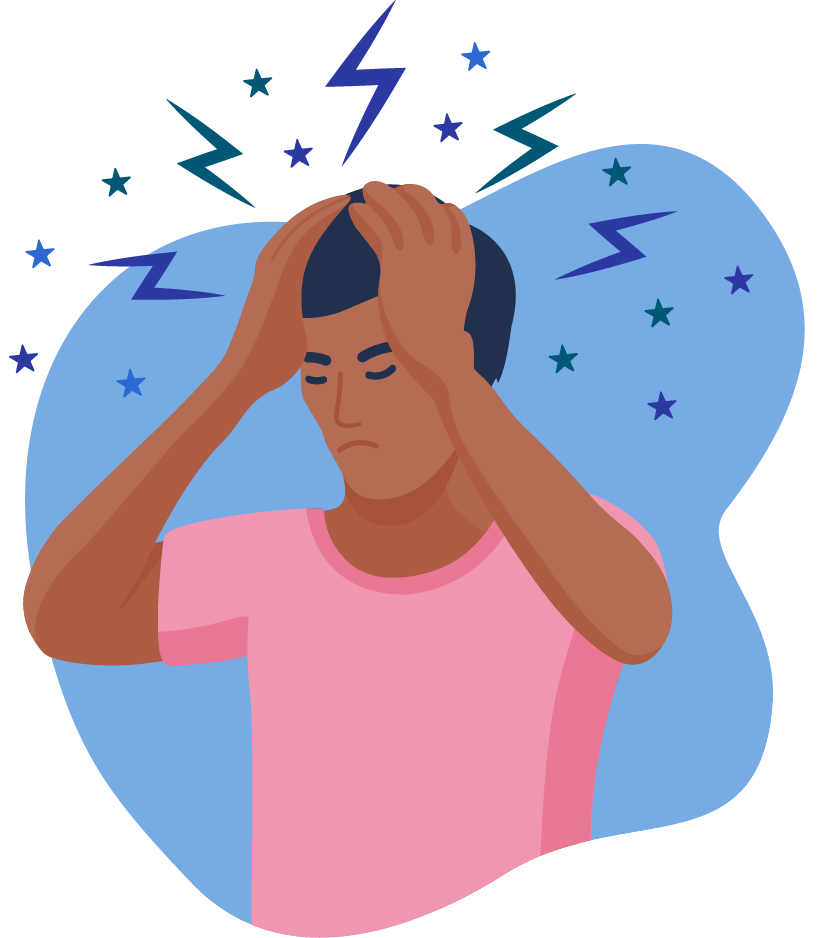
Are your headaches a symptom of migraine? Get a quick assessment.
Get updates directly to your inbox.




 Continue with Facebook
Continue with Email
Continue with Facebook
Continue with Email
Continue with Facebook
Continue with Email
Continue with Facebook
Continue with Email
Become a member to get even more





 Join
Join


 Your Privacy Choices

This is a member-feature!
Sign up for free to view article comments.
We'd love to hear from you! Please share your name and email to post and read comments.
You'll also get the latest articles directly to your inbox.